

Understanding Mangrove Adaptations and Their Hidden Intelligence

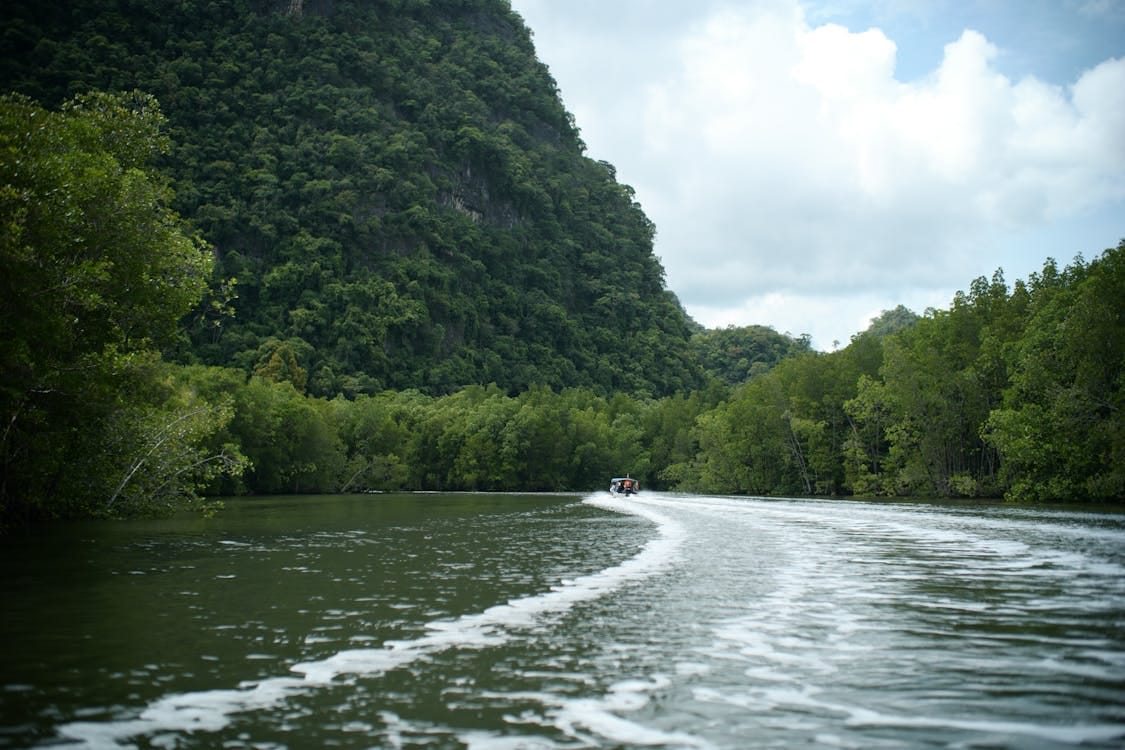
Across the coastlines of tropical and subtropical regions, a unique ecological niche thrives at the boundary where land meets sea. These ecosystems are distinguished by their resilience and remarkable tolerance to saline, waterlogged conditions.
Often overlooked in comparison to their inland forest counterparts, mangroves have evolved specialised adaptations to confront the dual challenges of saltwater exposure and tidal submersion. What they lack in elevation, they make up for in ingenuity, both in form and function. Here, life unfolds on shifting sediments, beneath the pull of tides, and within waters where few trees could hope to survive.
One of the most notable adaptations of mangroves is their ability to regulate salt. Because they grow in saline or brackish water, mangrove roots face constant osmotic stress.
Mangroves have learned the language of salt. In an environment where freshwater is scarce and salinity is high, survival demands either resistance or resourcefulness. Avicennia marina, for example, is equipped with ultra-selective roots that filter out salt at the molecular level. Others, like Rhizophora, absorb the salt but sequester it in sacrificial leaves, which they eventually shed. A few, remarkably, excrete salt through glands, tiny openings on their leaves where crystals glint like fine dust.
Equally remarkable is their solution to oxygen deprivation. Waterlogged soils in intertidal zones are typically anoxic, posing a serious challenge to plant respiration. Mangroves respond with aerial root systems. Pneumatophores, vertical roots extending above the mud, function as conduits for gas exchange, absorbing oxygen during low tide. In other species, stilt and buttress roots stabilise the tree while facilitating aeration, forming complex, elevated scaffolding above the substrate.
Their reproductive strategies also reflect ecological uniqueness. Many mangroves are viviparous, with seeds germinating while still attached to the parent tree. These propagules are released into the water already developed, increasing the chances of successful establishment in dynamic tidal environments. Carried by currents, they travel across estuaries and coastal margins before embedding in new sediment.
The significance of these adaptations extends far beyond individual survival. Mangrove forests perform essential ecosystem services, stabilising coastlines, filtering pollutants, and supporting marine biodiversity. Their submerged root systems create intricate habitats that serve as nurseries for fish, crustaceans, and mollusks, many of which are economically important to coastal communities.
You see their power in Bangladesh, where the Sundarbans, the world’s largest mangrove forest, stretch across the delta like a living shield, illustrating the vital role these ecosystems play in climate resilience. With frequent cyclones and rising sea levels, the mangroves serve as the first line of defense for millions of people living in the Ganges-Brahmaputra delta. Studies have shown that villages protected by mangrove belts experienced significantly lower casualties and property damage during Cyclone Sidr in 2007 compared to areas where mangroves had been cleared.
In Kenya, community-led mangrove restoration projects in the Gazi Bay area have demonstrated the feasibility of combining ecological conservation with carbon finance. The Mikoko Pamoja project, launched in 2013, uses verified carbon credits to fund mangrove planting and community development, while restoring degraded shorelines. The project has become a model of “blue carbon” management, showing how local stewardship can enhance both biodiversity and livelihoods.
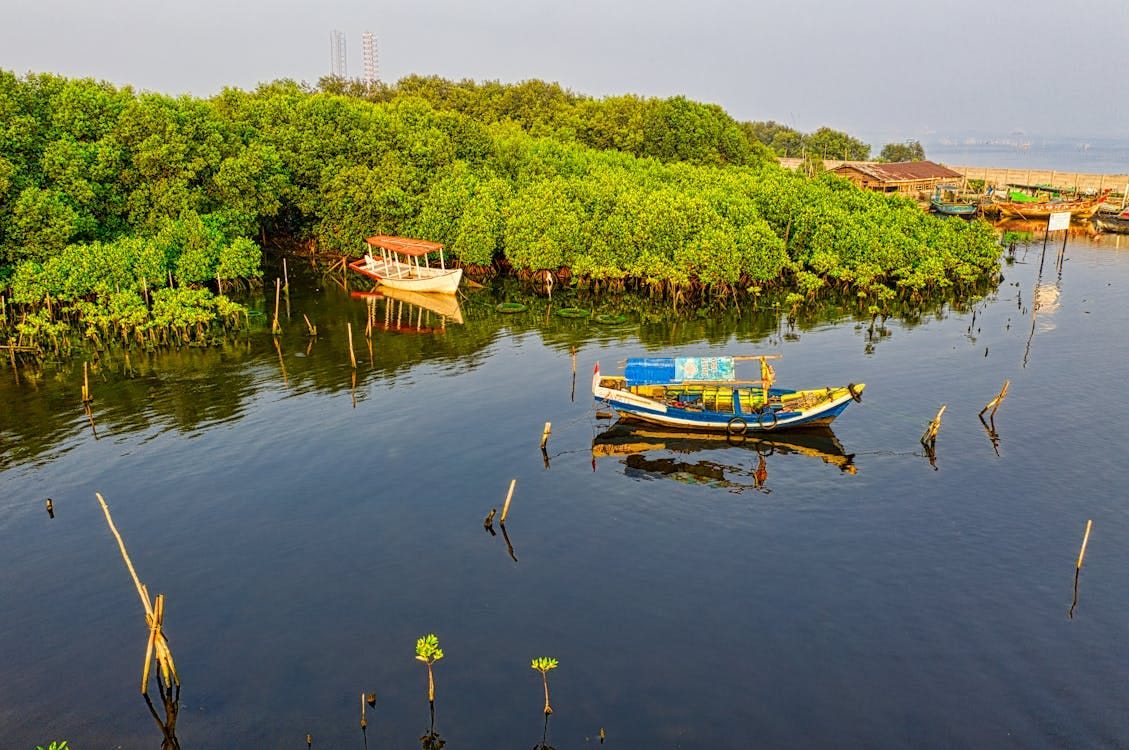
Meanwhile, in Indonesia, which hosts the most extensive mangrove coverage in the world, large-scale reforestation efforts are underway to address massive historical losses due to aquaculture expansion and urban development. In North Java, mangrove planting has been used to reduce coastal erosion and land subsidence, helping to protect infrastructure and agricultural land from inundation. These efforts also reflect a growing recognition by the Indonesian government of mangroves’ role in meeting national climate mitigation targets.
Scientists estimate that mangroves store up to four times more carbon per hectarethan tropical rainforests. Much of it is held in the deep, oxygen-poor soils that slow decomposition and allow carbon to remain locked for centuries. Protecting them is not just a conservation issue, it is vital for climate resilience and adaptation.
Yet, despite their resilience, mangroves are under threat. Coastal development, aquaculture, pollution, and rising sea levels have led to significant declines in mangrove coverage globally. According to the Global Mangrove Watch, we’ve lost more than a third of the world’s mangroves in just the last half-century.
Preserving these ecosystems means listening to them, acknowledging their complexity, endurance, and everything they represent.